
How to Optimize Packaging Inventory in a Volatile Supply Chain
How to Optimize Packaging Inventory in a Volatile Supply Chain
Supply chain disruptions are no longer the exception; they’re the norm. For manufacturers, one of the most vulnerable yet overlooked links is packaging inventory. Without the right boxes, films, or labels, production stops, deliveries are delayed, and costs spike.
The good news? Smart packaging inventory management can turn this risk into a strategic advantage.
Why Packaging Is a Hidden Risk
Packaging may be a small part of total spend, but it’s essential for every product that leaves the plant. A single missing component can shut down a line, while poor design or wrong materials can drive up freight, damage, and compliance risk.
Disruptions like plant shutdowns, natural disasters, regulatory changes, and resin shortages hit packaging hard. When packaging is treated as an afterthought, those shocks quickly cascade into costly downtime and lost revenue.
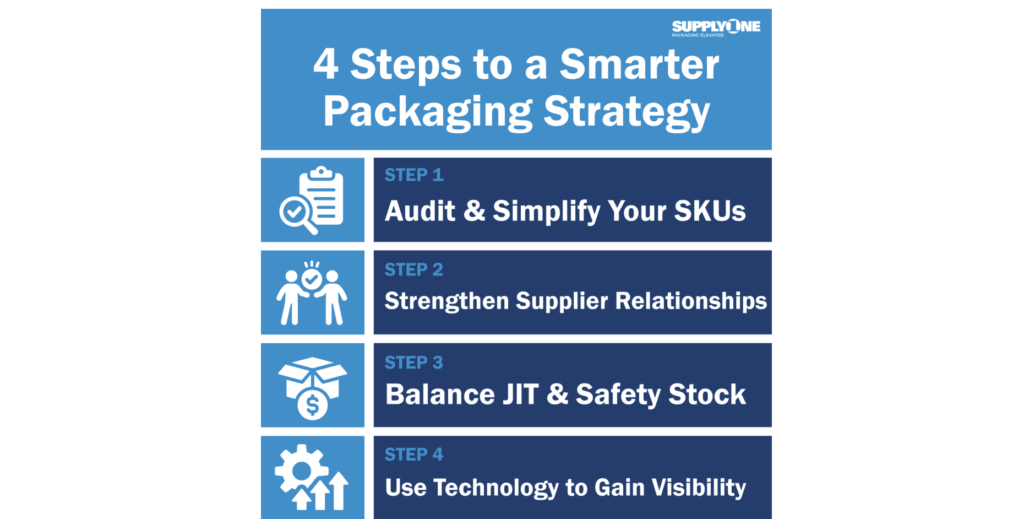
4 Steps to a Smarter Packaging Strategy
- Audit and Simplify Your SKUs:
Start by mapping your current packaging inventory. Many plants carry dozens of similar box sizes or film types that differ by only fractions of an inch, tying up capital and warehouse space.
A lean approach, like SKU rationalization, can cut complexity fast. Consolidating from 25 box sizes to 5, for example, streamlines ordering, reduces waste, and frees up floor space for production.
- Strengthen Supplier Relationships
Transparent communication with suppliers is a force multiplier during disruptions. Sharing forecasts, discussing capacity, and planning for contingencies builds trust and makes it easier to get emergency shipments or alternative materials when needed.
- Balance JIT and Safety Stock
Just-in-time (JIT) inventory keeps carrying costs low and working capital flexible, but it leaves little room for error. Safety stock acts as insurance against disruptions, but too much ties up cash and space.
A hybrid model often works best: JIT for standard items, safety stock for critical or high-risk materials that could halt production.
- Use Technology to Gain Visibility
Modern tools make it easier to manage packaging inventory proactively. ERP and cloud platforms give real-time visibility into stock levels, usage, and procurement cycles across sites.
AI and analytics can recommend optimal order quantities, stocking locations, and timing, helping avoid both stockouts and overstocking. RFID adds granular tracking at the pallet or unit level, improving accuracy and control.
Plan Ahead for the Next Disruption
Resilience starts with contingency planning. Monitor upstream markets (like pulp or resin) to anticipate price and availability swings.
Identify backup suppliers, qualify alternative materials, and validate designs in advance so you’re not scrambling when the unexpected happens. Vendor managed inventory (VMI) and managed service agreements (MSAs) can also help: suppliers manage replenishment within agreed min/max levels, improving stability without bloated on-site stock.
How a Packaging Partner Can Help
Many manufacturers lack dedicated packaging engineers or procurement teams focused on packaging. Partnering with a value‑added distributor like SupplyOne gives access to technical expertise, a broad supplier network, and national-scale buying power.
SupplyOne’s Packaging Management Program (PMP) and Managed Service Agreements (MSAs) help customers consolidate SKUs, reduce capital tied up in packaging, and free up warehouse space for revenue-generating production. By acting as an extension of operations, a strong packaging partner reduces complexity, cost, and risk so manufacturers can focus on core production.
Turn Packaging into a Competitive Edge
Supply chain disruptions are inevitable, but their impact doesn’t have to be. By treating packaging as a strategic function, through audits, better supplier relationships, technology, and proactive planning, manufacturers can build resilience, reduce waste, and gain a real competitive advantage.