
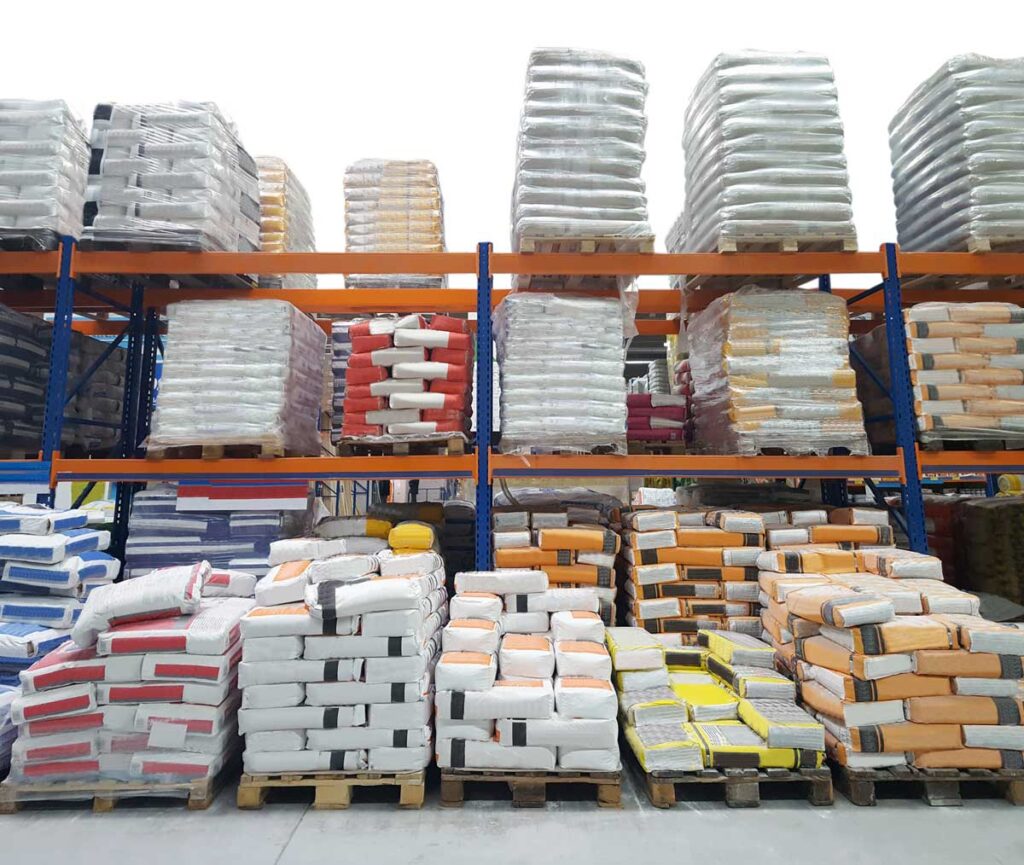
Automating End-of-Line Packaging for Building Materials Manufacturers
Building products manufacturers are under pressure to move more material, with fewer people, while protecting every load that leaves the plant. Labor markets remain tight, input costs are volatile, and customers expect on-time delivery with zero damage. That makes end-of-line packaging a critical place to unlock productivity, consistency, and savings. For manufacturers of bagged goods, panels, roofing, flooring, and other heavy, awkward construction materials, automating end-of-line packaging is one of the fastest ways to remove bottlenecks, improve load quality, and reduce risk.
What Is End-of-Line Packaging Automation?
End-of-line packaging automation refers to the integrated systems that prepare finished products for storage and shipment once they leave production. Instead of relying on manual handling and multiple standalone machines, these systems automate repetitive, labor-intensive steps such as palletizing finished units onto a stable load, stretch wrapping pallets to secure and protect the product, and applying inline labels for accurate identification, compliance, and traceability. By connecting these functions into a cohesive, right-sized system, manufacturers can move away from fragmented processes and toward a streamlined, dependable end-of-line workflow.
Why Automate End-of-Line Packaging for Building Products?
For building materials manufacturers, the end of the line is often where complexity peaks. Products are heavy, sharp, dusty, or irregularly shaped, and they must arrive at job sites or distribution centers in saleable condition. Automation directly addresses these challenges.
Key advantages include:
- Higher throughput and uptime – Integrated automation helps eliminate manual bottlenecks, reduce changeover time, and keep lines running at optimal speeds.
- Reduced labor dependence – Automating high-demand, repetitive tasks helps offset rising labor costs and ongoing workforce shortages.
- Improved load stability and product protection – Consistent palletizing and stretch wrapping reduce in-transit damage, returns, and rework.
- Greater packaging consistency – Automated systems apply the same patterns, wrap force, and label placement every time, supporting quality and brand standards.
- Less packaging waste – Dialed-in film usage, right-sized materials, and optimized patterns help cut excess material and support sustainability goals.
These gains roll up into stronger supply chain dependability, better customer experiences, and improved profitability for building products manufacturers.
How SupplyOne Designs Integrated End-of-Line Systems
SupplyOne combines packaging materials, equipment, and technical expertise to design end-of-line automation that aligns with your products, your footprint, and your long-term goals. Rather than pushing a single OEM or machine, SupplyOne’s automation specialists recommend and integrate equipment from recognized, best-in-class manufacturers.
Every installation is engineered around the specific requirements of building materials, including product size and weight, handling and safety needs, and line layout and flow. By treating end-of- line packaging as one connected system rather than a collection of isolated machines, SupplyOne helps manufacturers improve overall equipment effectiveness and reduce the lifetime cost of their packaging operations.
Single-Source Support: Equipment, Materials, and Service
Many building products manufacturers struggle to coordinate between multiple vendors for machinery, materials, and maintenance. SupplyOne’s single-source model simplifies that landscape.
With SupplyOne, you gain:
- A full portfolio of packaging equipment, from palletizers and stretch wrappers to case erecting, sealing, strapping, and conveying systems.
- Durable, application-specific packaging materials, including corrugated, foam, wood, plastics, and films engineered for heavy-duty building products.
- Packaging design and testing services to validate performance in real-world distribution environments.
This integrated approach helps ensure new automation projects deliver on their promise of higher productivity, measurable cost savings, and long-term reliability.
The Business Impact for Building Materials Manufacturers
Automating end-of-line packaging is more than an equipment upgrade; it is a strategic lever for performance and growth. By optimizing how finished goods are prepared for shipment, manufacturers can increase throughput without expanding headcount or floorspace, protect brand reputation with loads that arrive intact, compliant, and ready to use, gain better visibility into production performance and packaging costs, and create a scalable platform to support future product launches, new SKUs, and demand spikes. In an environment where every order, pallet, and truckload matters, end-of-line automation provides a clear path to doing more with less while improving the experience for both your operations team and your customers.